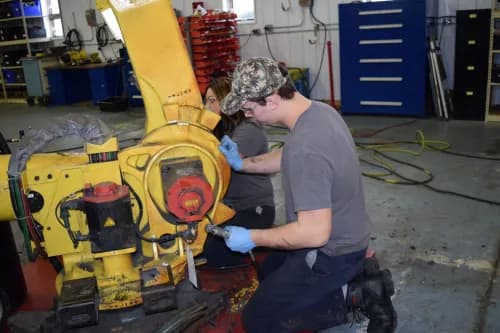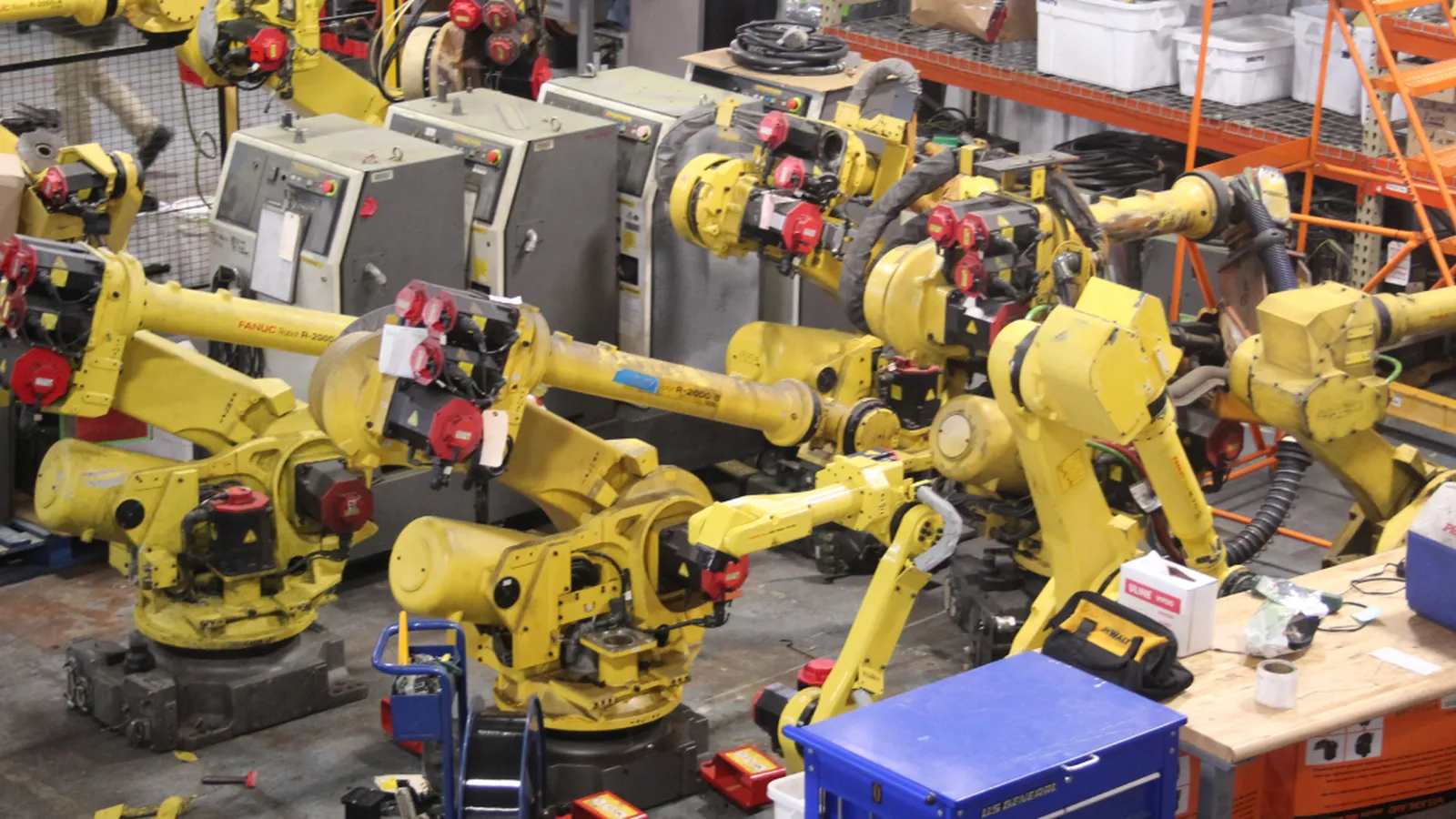
Restore Your Robot's Speed With Expert Robot Wrist Repair
Parts for this service
Test Product 1
Part no. test-product-1
Lorem Ipsum is simply dummy text of the printing and typesetting industry. Lorem Ipsum has been the industry's standard...
Test Product 2
Part no. test-product-2
Lorem Ipsum is simply dummy text of the printing and typesetting industry. Lorem Ipsum has been the industry's standard...
T.I.E. Industrial is super excited to announce we are now offering robot wrist refurbishment and repair services.
When a robot wrist starts failing, the instinct is to assume you need a full replacement. Most of the time, that's not the case. Servo motor faults, bearing wear, seal degradation, and crash damage are all repairable conditions, and our technicians at T.I.E. Industrial have rebuilt Fanuc wrist assemblies across dozens of models to prove it.
Our robot wrist repair process restores worn components to like-new operating condition. Every repaired unit goes through detailed performance verification before it ships back to your facility.
- Savings when buying Refurbished
- up to 60%
- Return on Investment
- > 3x
- Guaranteed Warranty
- 3 year
- Expertese
- 35 years
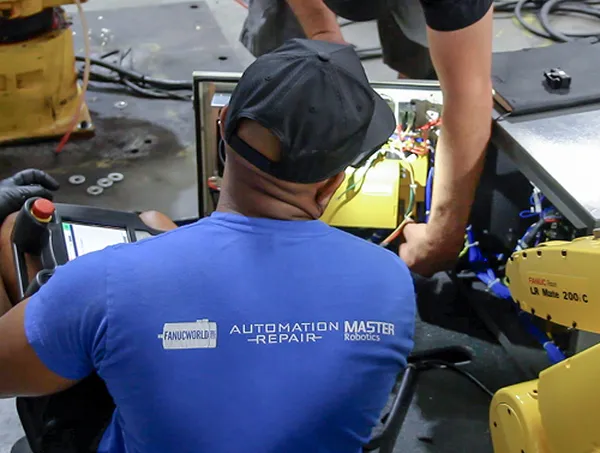
Dedicated Fanuc Robot Wrist Repair Capabilities
We provide specialized Fanuc robot wrist repair services backed by extensive experience servicing Fanuc wrist assemblies across numerous models. Our technicians understand the mechanical and servo-driven architecture of Fanuc wrist systems and perform detailed inspections to identify wear patterns.
Our current Fanuc wrist repair capabilities include:
- Fanuc R2000iA 165kg A290-7324-T503
- Fanuc R2000iB 165kg A290-7329-T501
- Fanuc R2000iC 165kg A290-7333-T501
- Fanuc R2000iC 210kg A290-7333-T501
- Fanuc M710iC 50/70kg A290-7125-T501
- Fanuc R2000iB 210Kg. A290-7329-T515
- Fanuc M900iA 350Kg. A290-7327-T501
- Fanuc M-10iA / ArcMate 100iC A290-7224-V556
- Fanuc P-700 (Fanuc paint wrist) EO-5093-011-007A
Our large inventory of robot wrists allows us to efficiently repair or replace damaged components.
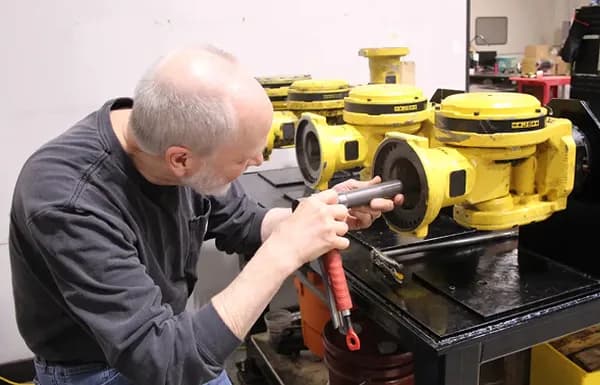
Common Causes for Robot Wrist Repair in Fanuc Models
A range of factors, from misaligned couplings to oil leaks and drive malfunctions, can cause failures in industrial robot wrists. We provide expert robot wrist repair services for numerous issues, including:
- Servo motor fault
- Shaft fault
- Brake fault
- Mounted head grounded
- Bearing failure
- Seal failure
- Over heat
- Crashes
- Lack of lubrication
Our Fanuc wrist repair process revitalizes these components to nearly new conditions, offering significant savings of 50 to 75% compared to standard OEM prices. Utilizing a unique cleaning and testing approach, we ensure these parts are restored to optimal functionality, offering an economical alternative to purchasing new equipment.

Why Engineers Trust Our Fanuc Robot Wrist Repair Services
Our Fanuc robot wrist repair services focus on reducing downtime with faster turnaround times than typical OEM repair channels. By diagnosing issues quickly and performing repairs in-house, we help you get critical equipment back into operation without extended delays.
Instead of investing in an entirely new unit, our robot wrist repair process restores worn gears, bearings, seals, and drive components to a like-new operating condition. Our approach protects your maintenance budget while extending the service life of your existing robot.
Because we maintain an extensive inventory of wrist components and assemblies, we replace damaged parts without waiting for long OEM lead times. Combining real-world load testing and detailed performance verification, we validate every Fanuc robot wrist repair under production-level conditions before it returns to your facility.
Engineers rely on our technical expertise because we understand how wrist performance affects accuracy, repeatability, and overall system stability. Our team works quickly and efficiently to minimize your downtime and extend the lifespan of your robotic equipment.
Request a Robot Wrist Repair Quote Today
If you're experiencing wrist axis faults, vibration, or loss of accuracy, now is the time to act. Our team responds quickly to robot wrist repair inquiries, providing a detailed quote so you can make an informed decision. Use the form above to submit your request today and take the first step toward restoring your robot's precision.
Request A Free QuoteFAQs About Robot Wrist Repair
How long does a Fanuc robot wrist repair typically take?
Routine repairs take 10 days to two weeks; we complete rush orders within five days. Turnaround time depends on the specific model and the extent of mechanical damage, but because we stock an extensive inventory of Fanuc wrist components and assemblies, we avoid the long lead times that come with sourcing parts through OEM channels. In many cases, repaired units ship significantly faster than OEM replacements would.
Can a repaired wrist perform as well as a new OEM unit?
Yes. Our repair process replaces worn gears, bearings, seals, and drive components with quality parts, then validates the assembly before it ships. The goal isn't just functional restoration; it's restoring the accuracy and repeatability your application depends on.
What environmental factors accelerate wrist wear?
Industrial robot wrists can wear prematurely when exposed to contaminants like coolant, chips, dust, or improper lubrication, which can degrade bearings and seals. Environments with high vibration, thermal fluctuations, or contact with abrasive materials can also accelerate mechanical degradation.
Related Articles
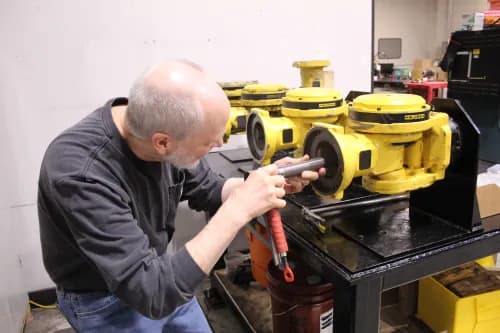
7 Warning Signs Your Robot Wrist Needs Repair | Robot Wrist Repair Services
The wrist joint is one of the most heavily used parts of an industrial robot. It's where precision, torque, and speed all come together — and it's often the first area to show signs of wear. When problems develop, ignoring them can lead to costly downtime, poor part quality, and even the need for full wrist replacement.
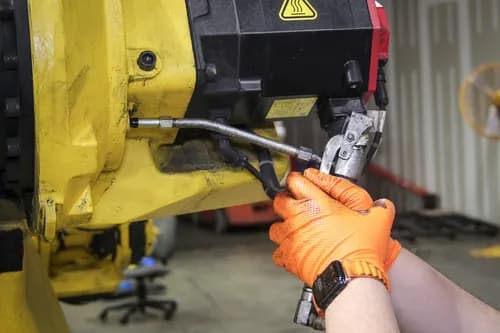
Grease Change Intervals: Manufacturer Guidelines vs Real-World Experience
In industrial automation, robotic systems are essential for manufacturing efficiency, precision, and productivity. Whether working with new or refurbished robots, operators must ensure that every component remains in optimal condition. Robot grease management is one of the most critical yet often overlooked aspects of robot maintenance.